


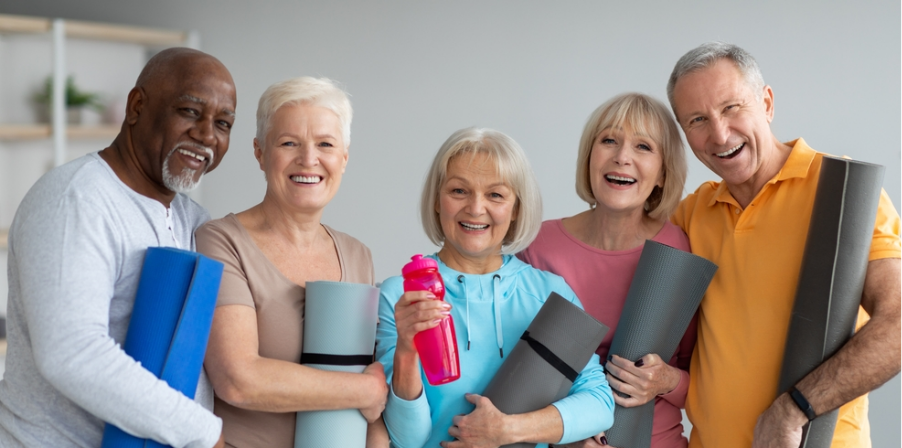
Exercise after 50: my best exercises for aging well
Why exercise after 50 is crucial for healthy aging
As far back as ancient times, Hippocrates developed his theory of the four humors. Il conseillait déjà la pratique sportive comme équilibre entre la force dépensée et celle absorbée. Today, modern science brilliantly confirms this ancestral intuition.
After 50 years, your body undergoes natural changes. Muscle mass gradually decreases. Bone density is decreasing. Metabolism slows down. These changes are not inevitable. Regular physical activity is the best defense against premature aging.
The ANSES figures speak for themselves. 95% of the adult population in France is at risk of deteriorating health due to a lack of physical activity. In seniors, this lack of exercise accelerates the loss of independence and increases the risk of falls.
The good news? It’s never too late to start. Studies show that even sedentary people who take up sports after the age of 60 quickly regain their physical abilities. They improve their healthy life expectancy by several years.
The concrete benefits of exercise after age 50
Maintain muscle mass and strength
From the age of 50 onwards, you naturally lose 1 to 2% of muscle mass per year without physical activity. This phenomenon is called sarcopenia. It leads to a gradual loss of independence in everyday activities.
Regular muscle strengthening reverses this trend. By exercising your muscles two to three times a week, you maintain your muscle mass. You preserve your strength. You remain able to carry your groceries, garden, or play with your grandchildren without excessive fatigue.
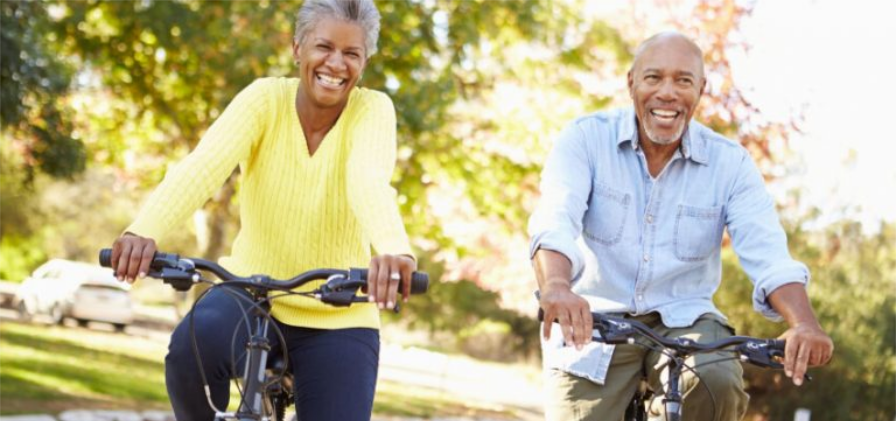
Protecting your bones and preventing osteoporosis
Osteoporosis particularly affects women after menopause. This bone weakening significantly increases the risk of fractures. A minor fall can then have serious consequences.
Weight-bearing exercises stimulate bone density. Brisk walking, light weight training, or moderate-impact sports strengthen your skeleton. This reduces your risk of fracture by 30 to 40%.